Bet On Yourself Summit 3.0 Rundown
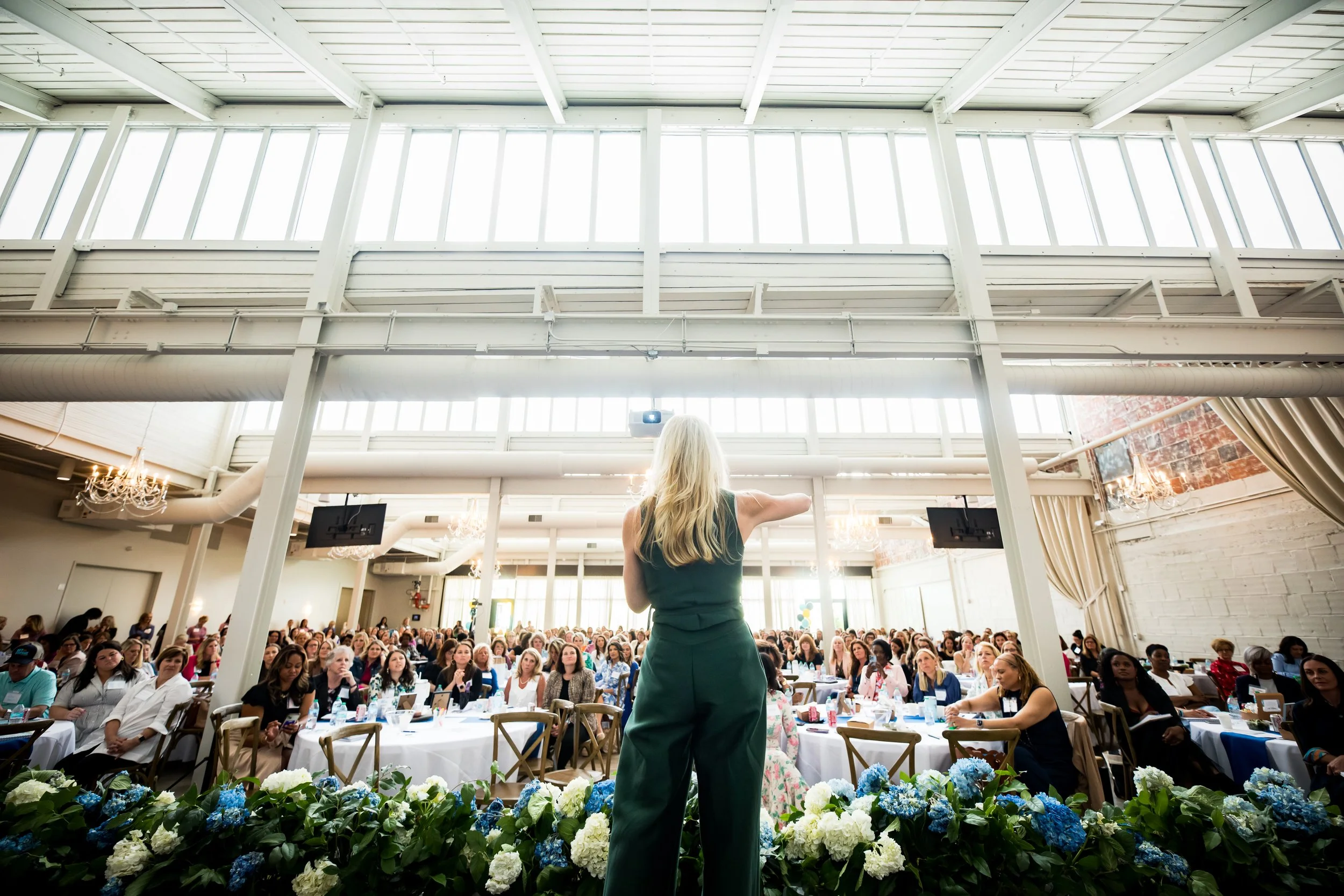
By 8:30 a.m., the parking lot at The Casey by Beau Monde is nearly full. Balloon arches frame the entrance as volunteers in blue shirts greet guests and keep things moving inside. The space is equal parts industrial and elegant, with exposed brick, crystal chandeliers, and long wooden tables.
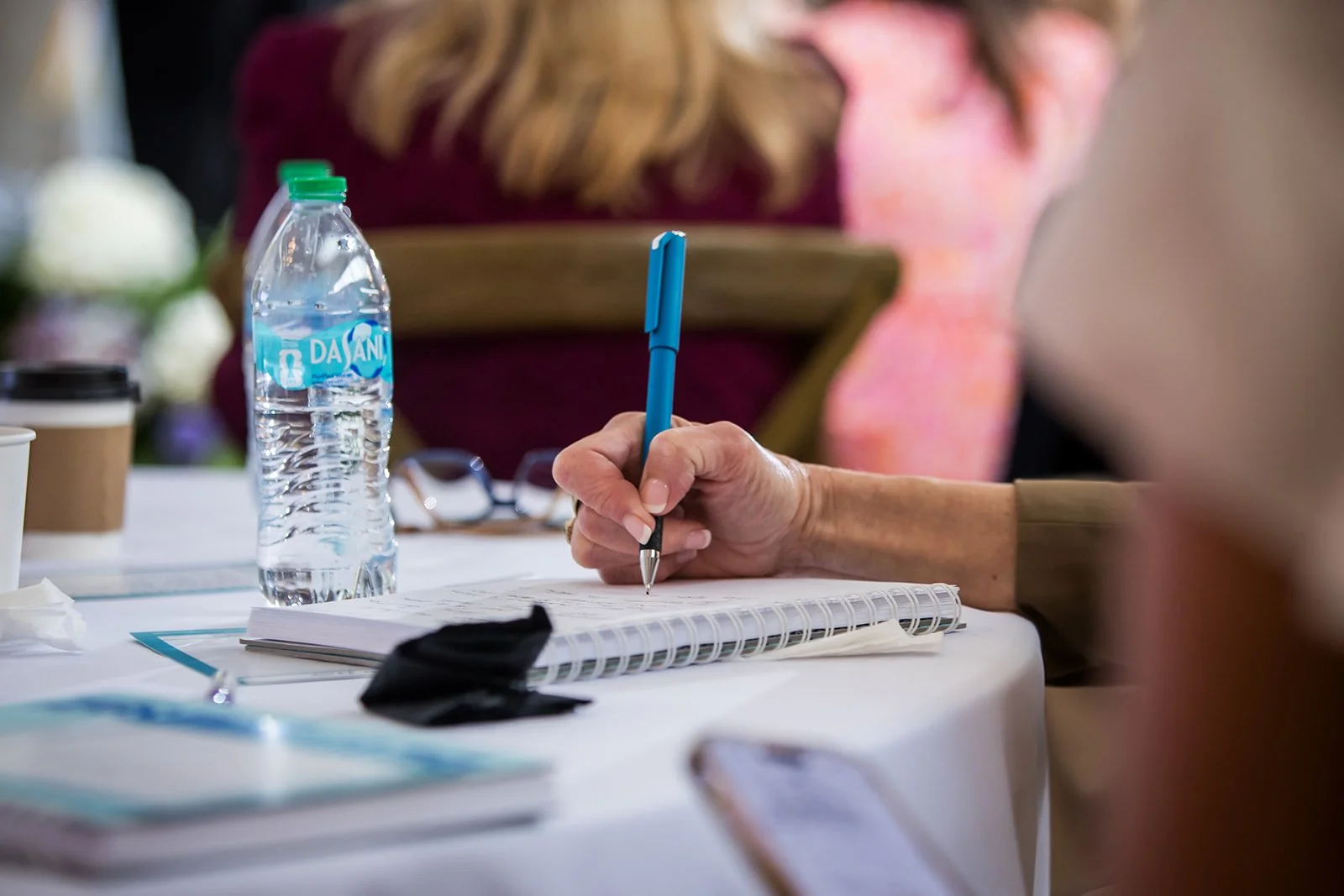
Four hundred and fifty attendees filter in, grab a cup of coffee and a pastry at the breakfast bar, and find their tables. Each place is set with a “Bet On Yourself” notebook, pen, and program. No detail feels overlooked.
There’s an easy warmth to the crowd. Some women snap selfies in front of the signage, others take panoramic videos of the room. Overhead, screens cycle through photos from past summits alongside quotes that hint at the day’s theme: This chapter is called make room. Remember why it will work. Stick with women who pull the magic out of you.
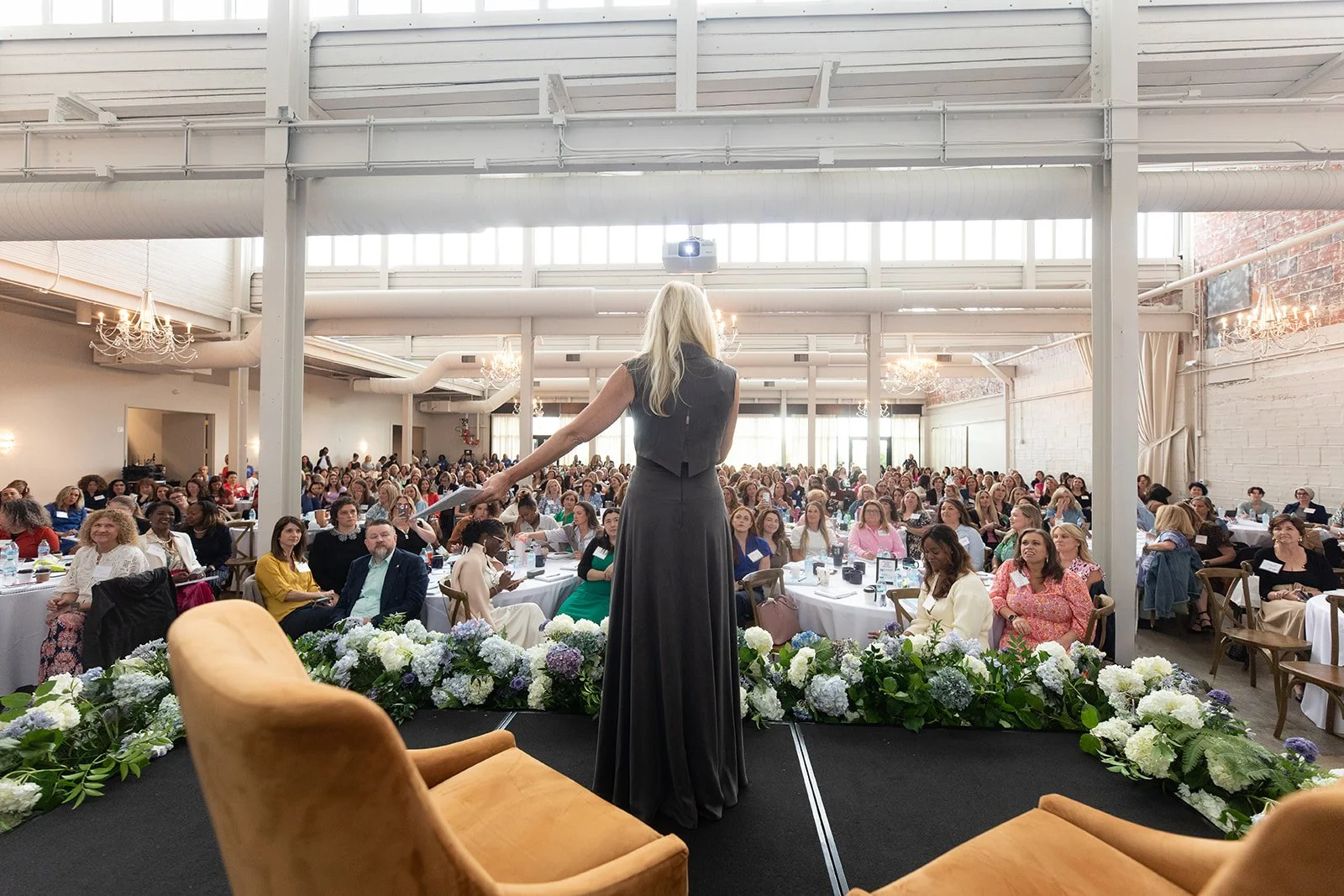
At 9:12, just a few minutes behind schedule, Molly Grantham takes the stage to Sara Bareilles’s “Brave.”
“We sold out in less than three minutes,” she says. “I’m bubbling over with what we have ahead for you.”
She introduces the day, thanks her sponsors and partners, and spotlights a live sketch artist who will capture each talk in real time. By the end of the day, those pieces will line the hallway—a visual record of what’s about to unfold.
Bet On Yourself 3.0 is underway.
BET ON YOURSELF SUCCESS STORY #1
The program opens with the first of four “Bet On Yourself” success stories, shown on screens throughout the day. In it, Stephanie Elliott captures the spirit of the summit. After attending Bet On Yourself 1.0, the paralegal experienced a shift in perspective. Now, she shares, she’s given herself permission to want more. She dares everyone in the audience to say, This is what I want.
THE JUGGLE IS REAL
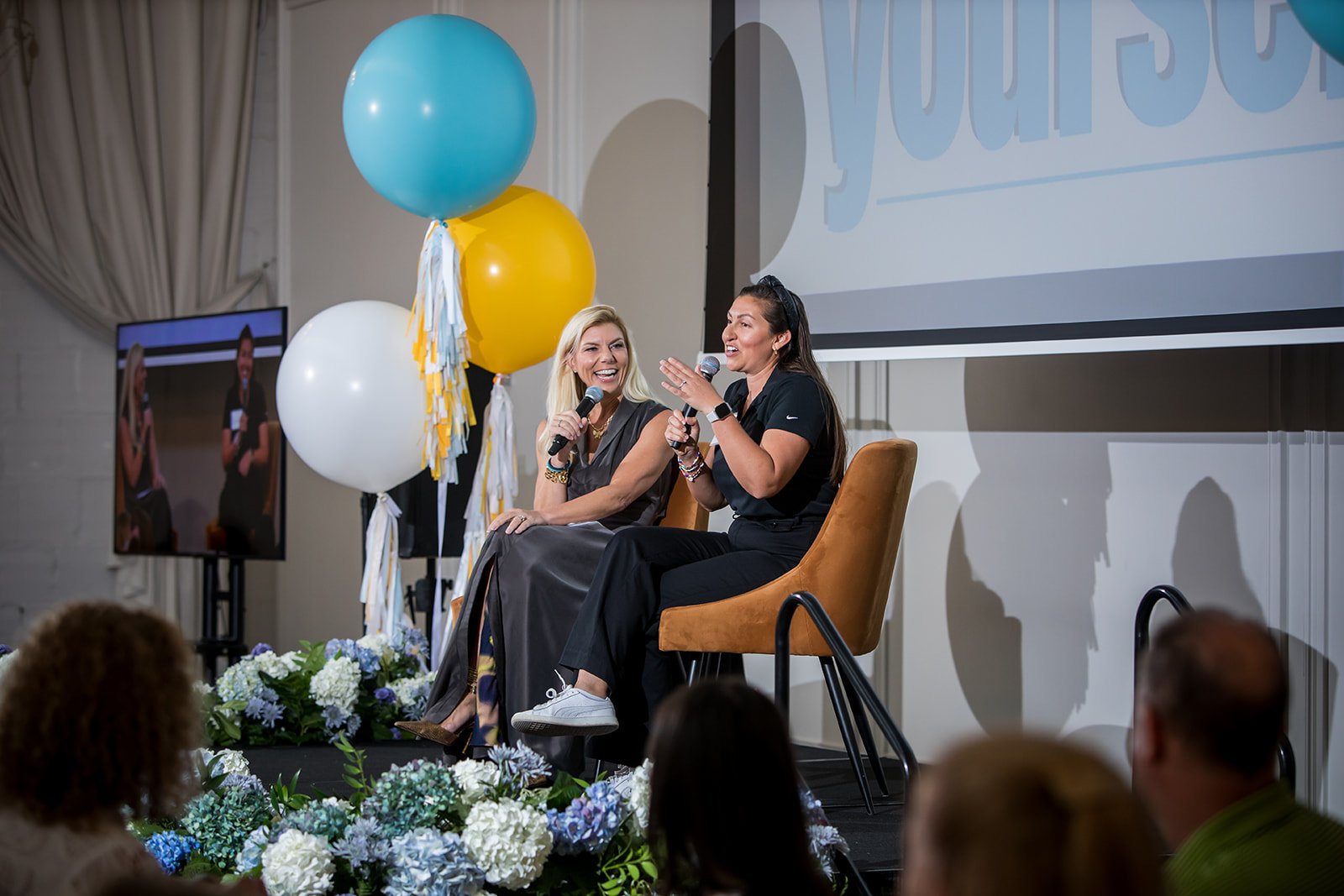
The first panelist is Emily Cole, co-founder of the Savannah Bananas. In a pre-recorded video, her husband and co-founder Jesse Cole introduces her, offering a glimpse into the thinking behind their unconventional approach.
“Baseball games were slow and boring,” Emily says. “The average MLB fan is a 60-something man. The sport was aging out, and we wanted to make it more exciting, so we added entertainment.” What began as a reimagining of the game has grown into a full-blown ecosystem with additional teams like the Firefighters, Texas Tailgaters, and the Loco Beach Coconuts. “My favorite thing,” she adds, “is seeing three generations sitting together.”
Off the field, Emily’s life is just as full. The mother of three is in a different city nearly every week. One of her biggest lessons, she says, has been learning to accept help. For the past five years, an au pair has traveled with their family, supported by what she describes as a strong village.
After welcoming their now 7-year-old son, Emily and Jesse learned that roughly 400,000 children in the U.S. need homes. In 2020, they became licensed foster parents through Gaston County. Their daughter joined their family at age two, just three months younger than their son, giving them two toddlers at once. After three years, they adopted her.
Nine months later came a call about another baby girl, who was in the NICU detoxing. “We just need someone for the weekend,” they were told. But on Mother’s Day 2022, the child’s biological mother made a different request: She wanted the Coles to raise her daughter. The adoption was finalized in 2024. Today, Emily is raising two 7-year-olds and a 4-year-old.
Their nonprofit, Bananas Foster, grew from that experience, with a mission to support the foster care community while encouraging others to get involved.
Emily closes with a few reminders: Things fail every night, but something good or funny always comes out of it, too. You have to move through the messy to get to the great. And perhaps most importantly, be intentional about who you bring into your life. “We hire really, really carefully,” she says. “We have almost zero turnover, and that’s what I’m most proud of. We never want to be the smartest people in the room.”
THE ART OF COFFEE?
Next up is Sherry Deutschmann, founder of BrainTrust, and Christine Motherwell, senior vice president of Human Resources at Coca-Cola Consolidated. Their theme: Death by a million coffees—and the line between being accessible and being consumed.
“Come ready. Come prepared. Be intentional,” Christine says. “Show up on purpose.” An early-morning coffee isn’t casual if you want it to count. Preparation signals respect and builds trust quickly. “My guard comes down,” she says. “I’m more willing to invest in the conversation.”
The flip side is just as clear: When you don’t show up well, the conversation can stall before it starts. Time, they stress, is the most valuable currency in the room.
“Respect it,” Sherry adds. “Have a specific ask.” She offers a simple framework: Here’s why I’m reaching out. If you were in my shoes, what would you do?
What earns an automatic no? Lack of intention. “No agenda, no attend-a,” she says. And one of the most common missteps: Failing to follow up. A handwritten thank-you note, she adds, still carries weight.
They close on a broader reminder: “I hope you aren’t just reaching out to a mentor,” Christine says. “I hope you’re mentoring others.”
CONFIDENCE THAT COUNTS
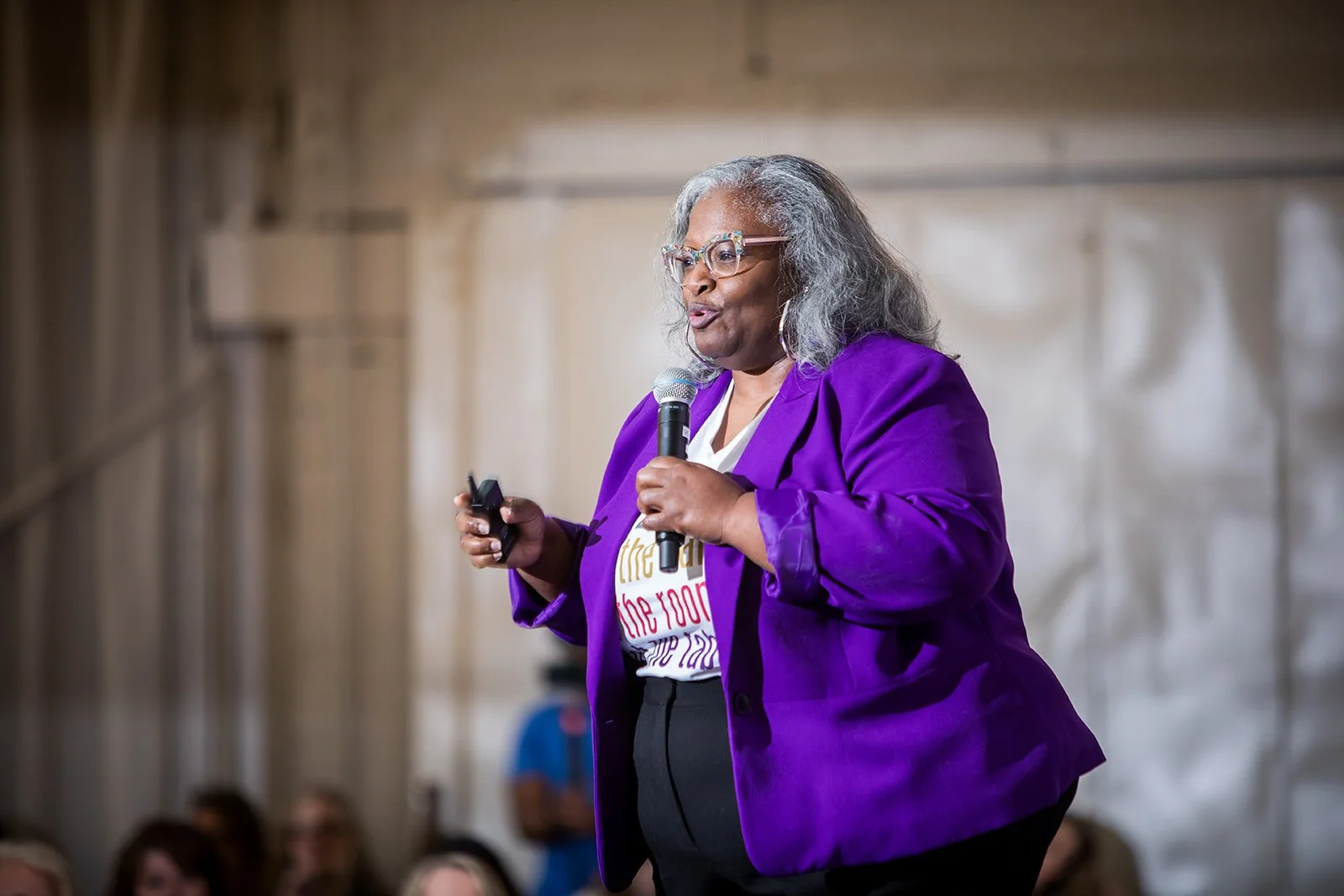
Lisa Medley, founder of Lisa Medley Executive Coaching, takes the stage to “I’m Every Woman.”
Her focus: How to bet on yourself when you get the meeting.
“What does confidence look like?” she asks. Calm. Clarity. Conviction. Commanding the room you’re in.
Then she pushes deeper: What’s your “confidence default”? Do you over-explain? Stay quiet to avoid saying the wrong thing? Try to manage everyone else’s reactions? None of these, she says, are confidence. They’re coping strategies.
“How many of you have been in an important moment and didn’t show up as your best self?”
Silence, she explains, isn’t passivity. It’s intention. It’s the difference between reacting and responding.
She finishes with this guidance: Know your ask. Own your truth. Be clear on what you stand for. “Conviction is a decision, not a feeling,” she says. “Decide who you are before the room confirms it.”
I’MPOSSIBLE
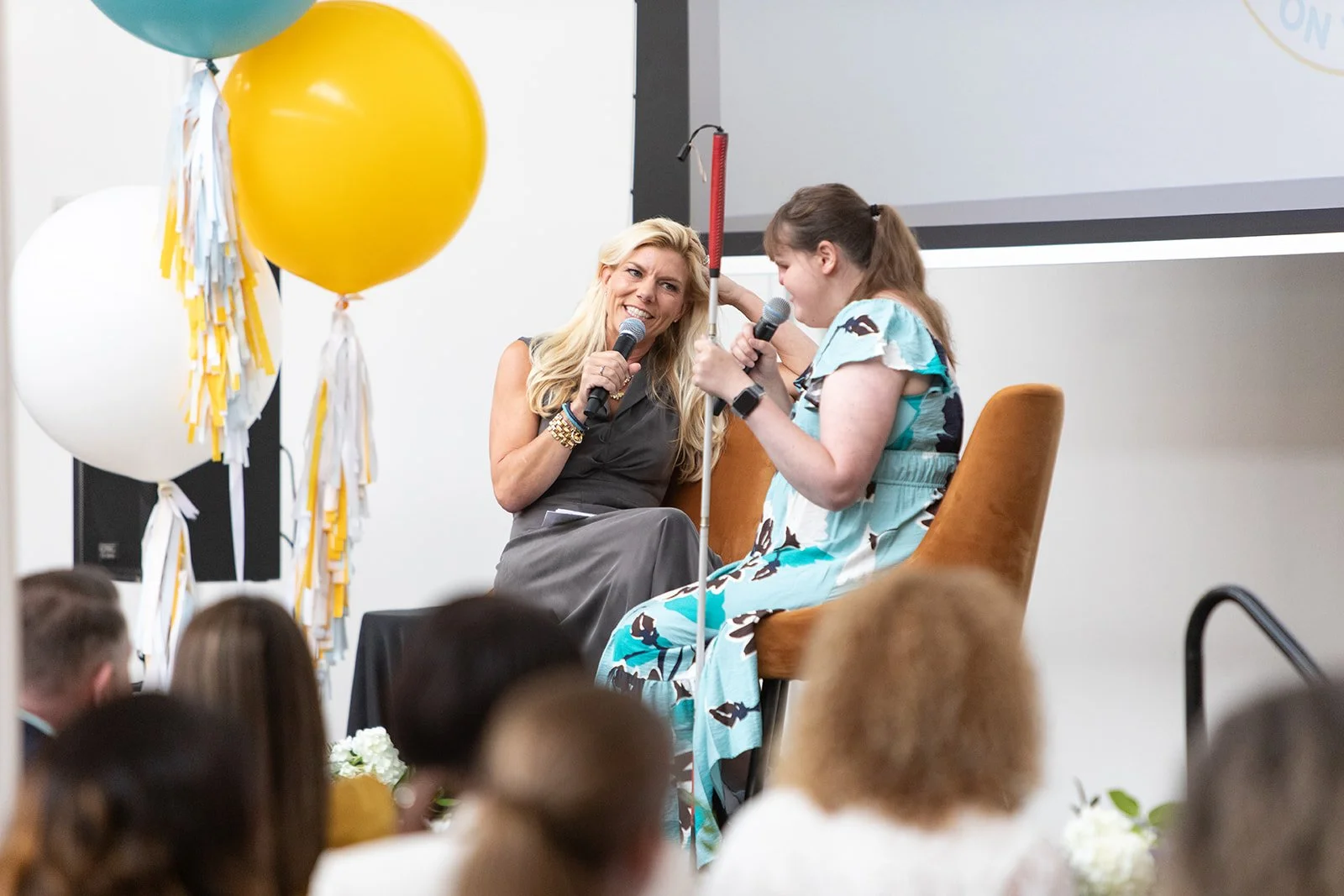
Cassidy Hooper takes the stage to Journey’s “Don’t Stop Believin’.” At 30, she embodies that message: Nothing is impossible. Born without eyes or a nose, she leads with both resilience and humor.
Molly opens with, “It’s been a few years since I’ve seen you.”
“Well, I guess I’ve never seen you,” Cassidy replies. The room erupts in laughter.
Cassidy speaks about independence and what it means to move through the world without sight. Living with four other people who are blind or visually impaired, she’s learned to rely on listening, intuition, and repetition. “I’ve made tacos, pancakes, and barbecue spaghetti,” she says with a smile.
Molly first met Cassidy at age 11, when she was one of the original “Molly’s Kids.” Since then, Cassidy has undergone a complex surgery to create a functioning nose. But she learned early how to navigate the world on her own. At 10, she began attending school in Raleigh, boarding a train each Sunday night for the week ahead. Her parents made sure she could board a plane, move through security, and operate independently. Today, Cassidy stays active through a number of activities including curling, singing, and bowling.
“I hope you feel how much we appreciate you,” Molly says. “What you’re showing is the power of betting on yourself.”
And, she adds, nodding to Cassidy’s humor: Let the uncertainty guide you.
BET ON YOURSELF SUCCESS STORY #2
Kenitra Huey-Hopkins, owner of Pose It Up CLT, took headshots at the inaugural Bet On Yourself summit. Now, she’s part of the program. “I love bringing people to the camera and hyping them up,” she says. She remembers what it felt like to sit behind a desk, working for someone else. “Betting on yourself isn’t the end,” she says, “It’s the beginning of something beautiful.”
AUTHENTICALLY YOU
After lunch, the program resumes with a recording of “Rise Up” as guests settle back into their seats. But midway through, something shifts. The voice sounds closer. It isn’t a recording. From the back corner of the room, LaRhonda Carlton emerges, delivering the song live with such power that it brings audience members to tears.
Molly first discovered LaRhonda in the early days of COVID, when a TikTok video of her singing in a restaurant kitchen began circulating. At the time, LaRhonda was plating meals during a long shift, singing to keep herself grounded, when a coworker unknowingly filmed her. The video quickly gained traction and caught the attention of The Ellen DeGeneres Show in December 2020.
Back then, she was working 19-hour days, using music as a way to manage her stress. On the day she was recorded, she was short-staffed, overwhelmed, and fielding difficult customers. “I had to come through, even though my life was falling apart,” she says. “So I started singing.”
The next day, she got a call from her corporate office; they’d received a complaint that LaRhonda wasn’t wearing a mask while singing. But while she was driving home, the video had already been posted. Within minutes, it went viral.
When Ellen producers began reaching out, LaRhonda assumed it was a scam. It wasn’t. A producer eventually connected with her on Facebook, sent her equipment, and arranged for her to appear from her kitchen table. That’s when Ellen DeGeneres surprised her live on air.
Today, LaRhonda works in manufacturing and continues to sing when she can, still chasing the possibility of doing it full-time—maybe one day on a cruise ship.
“I want you to be bold,” Molly tells her. “You’ve got a mic and a whole stage.”
LaRhonda closes with a simple message: “If I bet on others, they might let me down. But if I bet on myself, I win—no matter what. My children and grandchildren are betting on me, so I have to bet on myself.”
Molly leaves her with a final call to action: When you have the mic, and something to say—say it. Don’t talk around it. Say it.
DIFFERENT STRENGTHS
Next up is Meghan Huffman, Vice President of Digital Health at Novant Health, and Dr. Claire Bowles, a board-certified obstetrician-gynecologist with the system. Their walk-out song is “This Girl Is on Fire.”
Their conversation centers on a shared goal: Building a space where women feel seen, supported, and informed through menopause.
Dr. Bowles had spent 25 years at Novant running a menopause-focused practice, often managing complex cases alone, one patient at a time. “Menopause is a safe topic for me,” she says, “but for many patients, I was seeing women who had already been to multiple doctors and clinics—dealing with insomnia, depression, rashes, heart palpitations. The list is long.”
When Huffman reached out about expanding care, she immediately saw the potential.
Together, they launched the Novant Health Virtual Care Network and a Virtual Menopause Wellness Clinic. Within two hours of opening, every appointment was booked. “I think the pilot is over,” Huffman says to laughter. “We’re going to need more doctors.”
What they found, Dr. Bowles explains, was that menopause is rarely the only issue—just the one finally being named. “Women take care of everyone around them and put their own health last, until they’re far down the path.”
The virtual model was designed to change that, improving access for women everywhere, including those in smaller towns. Now, the model is expanding beyond virtual care, with a new brick-and-mortar location opening in SouthPark.
“People are turning to the internet for answers,” Bowles says. “We want to be a lighthouse—offering education and guidance during this stage of life.”
She notes that women can spend 30 to 40 years in menopause. Huffman closes the session with a final reminder: “Don’t just bet on yourself. Take care of yourself.”
BET ON YOURSELF SUCCESS STORY #3
Anna Lucke has been a pilot for 26 years, which is an especially notable achievement in a field where women make up just 5% of the world’s airline pilots. The mother of two recently became captain at American Airlines. “I thought, What are you waiting on? You can do this. Just jump,” she recalls.
That mindset carried her through training. “I bet on myself and upgraded to captain last summer,” Lucke says. “I wore my Bet On Yourself bracelets every day of training. I called it, ‘The Summer I Turned Captain.’”
MEN.
“This is not just for women,” Molly begins.
While nearly 98% of her events are attended by women, she emphasizes they are for everyone. “When it’s predominantly women in the room, we can ask why women are treated the way they are, but we risk talking in an echo chamber,” she says. Today, the conversation expands: What do men in senior leadership roles observe about the differences in how male and female employees are perceived and supported?
To the tune of “It’s Raining Men,” three panelists take the stage: Mike O’Leary, managing partner at Ernst & Young; Cedric Thomas, vice president and general manager at Cox Media Group; and Wes Hyland, vice president of sales at Devoted Health.
Molly opens the discussion by naming a quiet but common barrier: the internal voice that asks, Why should I be here? For many women, she notes, that doubt can lead to self-selection out of opportunities they’ve already earned.
Their discussion touches on voice and timing, the confidence gap, humility, and how differently it can show up across genders.
Wes shares an example of a female colleague who disagreed with leadership but chose not to speak up in the meeting. Instead, she followed up with a detailed, five-point email. That approach ultimately led her boss to respond, “You’re absolutely right.” Sometimes, he notes, impact is about choosing the right format, not silence.
Drawing on hiring experiences, Mike notes a pattern: Women often arrive more prepared, more thoughtful, and more attuned to listening, while men tend to lead with confidence and self-promotion.
Cedric agrees, adding that confidence is often over-indexed in how men are perceived. “Men come in with confidence,” he says. “Women deserve to be in that room, too.”
“We want them to like us,” Molly adds, naming another dynamic at play.
She then poses the question: What do women believe matters at work that leaders say doesn’t?
Mike points to flexibility and the importance of acknowledging full lives outside of work. “I’d like to see women stop apologizing for having outside responsibilities,” he says.
Wes adds: Let go of office politics and the need for approval. “Stop getting caught up in gossip. The minutiae doesn’t matter in the long run.”
Mike urges leaders to take responsibility for culture: “Men need to call out the nonsense when they see it—and make it clear it’s not acceptable.”
Wes offers another practical takeaway: “Have a mentor of the opposite sex.”
Later, Morgan Fogarty and Janine Davis step in to moderate audience questions, which quickly turn candid.
What about women who do speak up and are labeled difficult or arrogant? Cedric acknowledges the double standard. “The traits we celebrate in a man, we often criticize in a woman,” he says.
More questions follow. Why does feedback so often come only when it’s requested? What do men say about women when they’re not in the room? And are leaders actively mentoring women—especially women of color?
By the end, it’s clear the panel is composed of allies who are willing to reflect and speak honestly. But, as all three suggest in closing, real change will depend on whether those values are carried beyond the stage and into the rooms where decisions are actually made.
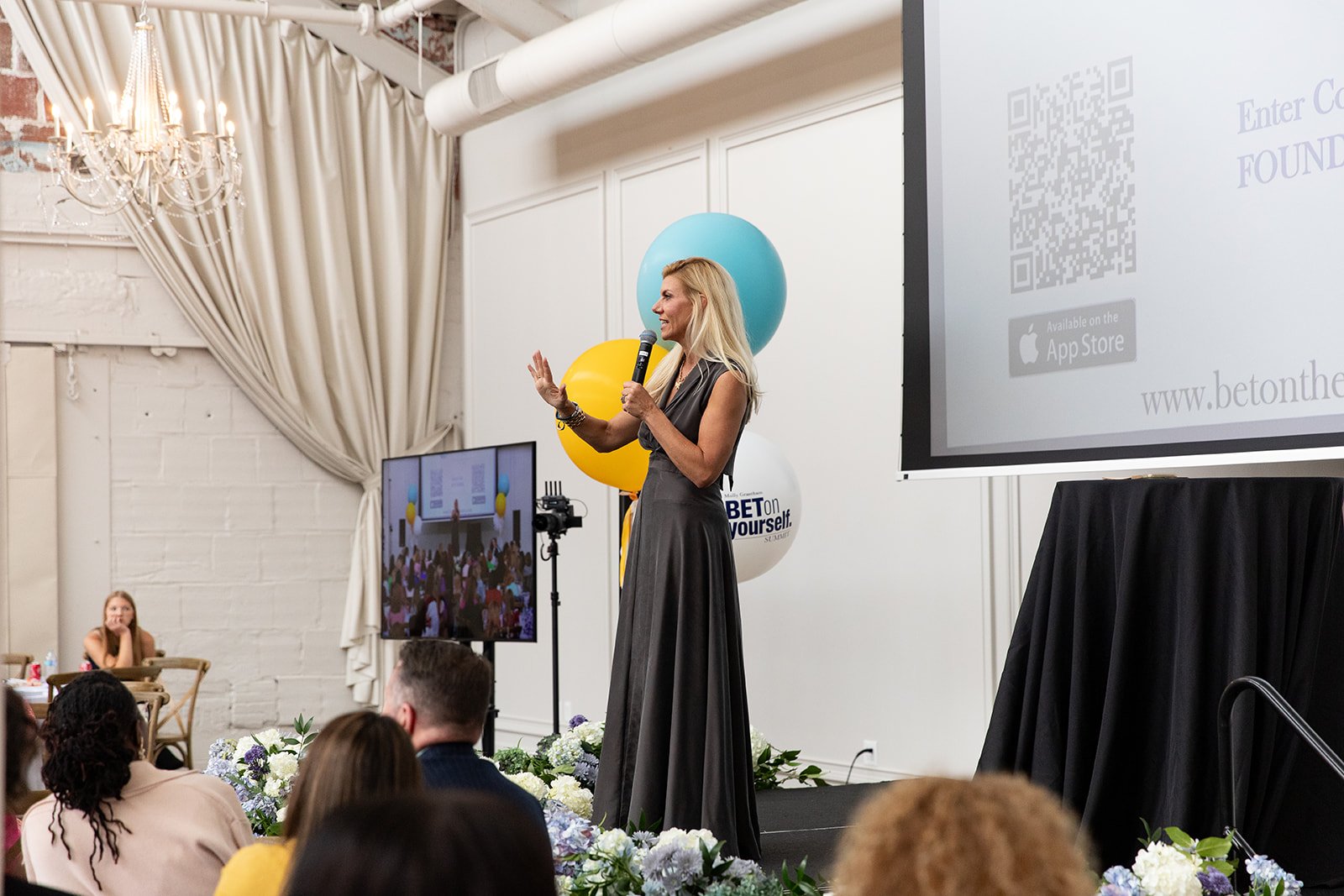
MOLLY: BET ON YOURSELF
After a brief break, the audience returns for closing remarks from Molly, who promises to keep things honest.
“The truth is, I sometimes wonder what my current life looks like from the outside,” she says. “I imagine it looks like I’m killing it. But from the inside, I can tell you, it’s not always clear, and it’s not always confident.”
She explains that the reality is far less polished. It comes with long days, real risk, and no guarantees. “I’m working harder than I’ve ever worked in my life, which is saying something, because I’ve always liked to work,” she says. “But I’m also happier than I’ve ever been. Everything in the last two years fits better.”
She describes the trade-off after a 20-year run at WBTV and daring to build a new career outside of media. “I left a very structured life with a set role, a steady paycheck, and clear definitions of success,” she says. “I traded that for building something I have to define every day. Before, success was visible and my identity felt fixed. Now, if I have an idea, I have to figure out how to make it happen. I traded certainty for control.”
She notes that the first Bet On Yourself summit was the hardest, and each one since has gotten a little easier. “Betting on yourself is a practice,” she says. “The more you do it, the more you learn how to do it again.”
She adds that about 25% of the day’s attendees had been to a previous summit, a sign of that momentum building. “You all are the point,” she says, gesturing outward. “And there were 750 people on the waitlist today. They’re the point too.”
She recalls a recent conversation with a friend who told her, “You made a splash, and from that splash, all those ripples started forming.”
“Look at this room,” Molly says. “People here are in every stage of life, from every walk of life. The most tangible measure of Bet On Yourself is ticket sales. The first summit sold out in an hour, today in under three minutes. Summit 3.0 is yours. These are the ripples.”
BET ON YOURSELF SUCCESS STORY #4
After 30 years in local news, Paige Tatum began to worry she had become too comfortable, and too stuck in the “what ifs” to make a big leap. Then she was laid off.
“What can I do?” she remembers thinking. “I’ve only ever done this.”
She says there’s no room for nostalgia when you’re forced to rebuild a career. “You can’t pine for the old days,” she says.
A turning point came when her friend, illustrator Dale Stephanos, reached out after designing the Betty White stamp. Despite the high-profile work, few people knew his name. He asked for help getting visibility, and she helped secure him a segment on The Today Show. From there, her own work began to expand. She went on to launch Paige Tatum Media, a media consulting business.
“Bet on yourself isn’t a mantra,” she says. “It’s a mindset.”
THE WAVE
Molly’s closing remarks seamlessly transition into the unveiling of the project she’s been building. Over the past few months, she says, a community has been taking shape. Now it has a name: The Wave.
“Because waves are constant—big, small, always moving,” she explains. “They create momentum. They carry us forward. The question is: How do we keep it going?”
She pauses, then adds: “There wasn’t a community like this before, but in the back of my mind I knew there would be. We’ve swung for the fences.”
The Wave, she explains, is a custom-built platform and monthly membership for the Bet On Yourself community. It includes a member directory, a business hub, and a way to stay connected long after the summit ends. Have a question? Go on The Wave. Need a graphic designer, a tutor, a divorce attorney? Go on The Wave.
“It came from what I needed myself,” she says. “When I was betting on myself and thinking about what came next, there wasn’t a one-stop shop. So I built it.”
Members can join for $24 a month to connect with summit attendees, find collaborators, and access curated content. Each month, The Wave will feature a “Monthly Swell” with longform conversations and minimal editing. The first features Cathy Bessant and Andrea Smith, who focus on collaboration over competition.
In a preview clip, Smith reflects, “People always tried to make them competitive.” Bessant adds, “It’s having the confidence to say, ‘I’ve never done it—but I believe I can.’”
New Swells will drop the first Tuesday of each month. The next installment explores finding yourself through grief. Alongside that, Molly introduces “Weekly Ripples,” shorter, ongoing stories designed to keep the momentum going. The platform will also include in-person events, virtual gatherings, and an elevated retreat planned for Charleston next January.
As the session opens back up for audience questions, Morgan Fogarty and Janine Davis return. Then, at 3:07 p.m., Morgan shares an update: 200 people have already signed up for The Wave.
The afternoon concludes with a champagne toast and one final invitation to show up on purpose. Command the room you’re in. Know your worth.
Bet on yourself.
video by Infinitude DC, LLC
Bet On Yourself Summit 2.0 Rundown

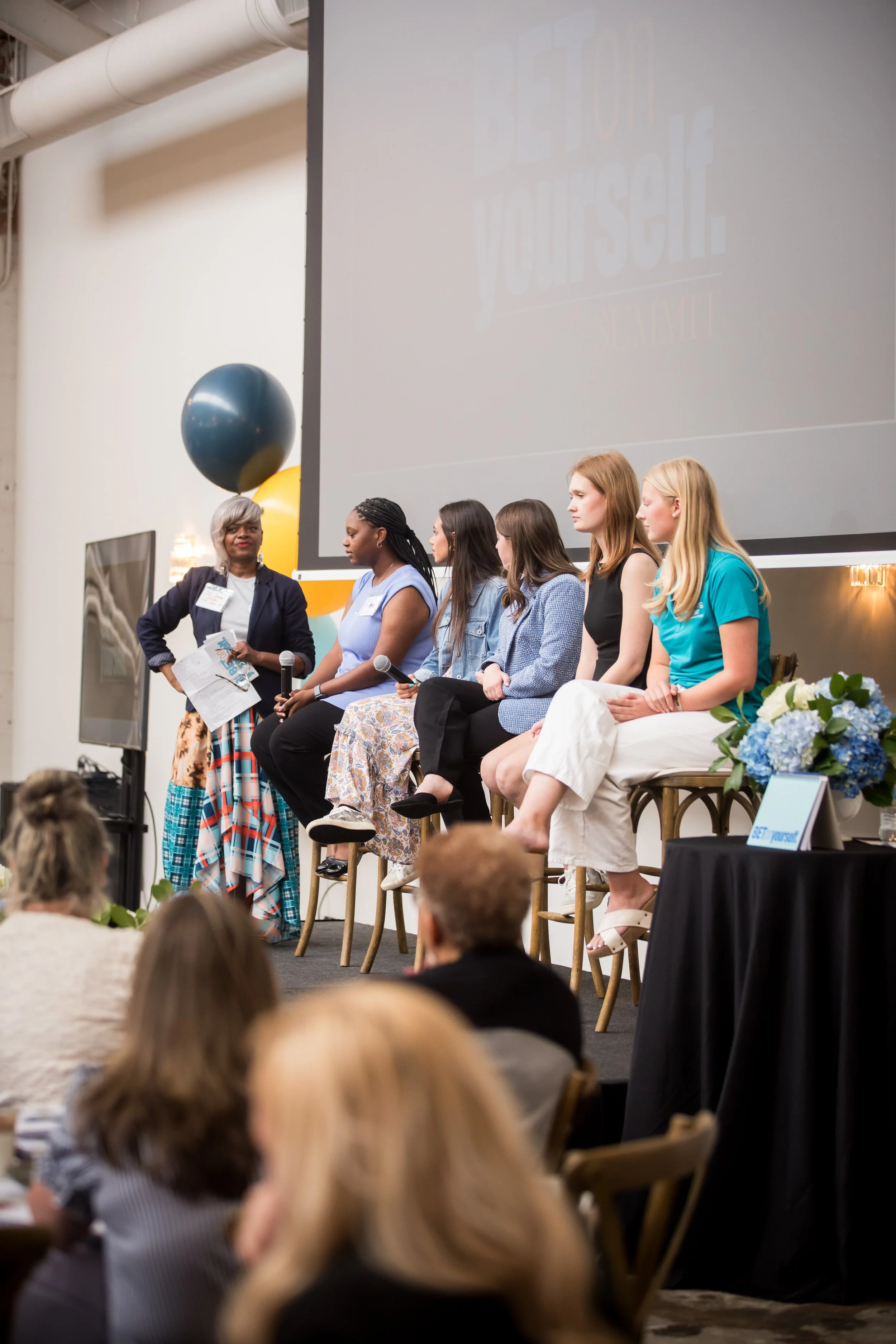
Inside the sellout Bet On Yourself Summit 2.0, a core message emerged: resilience and self-belief transcend age, background and experience. Nearly 450 people in the room, 17 speakers, six hours of inspiration, countless words of advice and one powerful suggestion: Bet On Yourself.
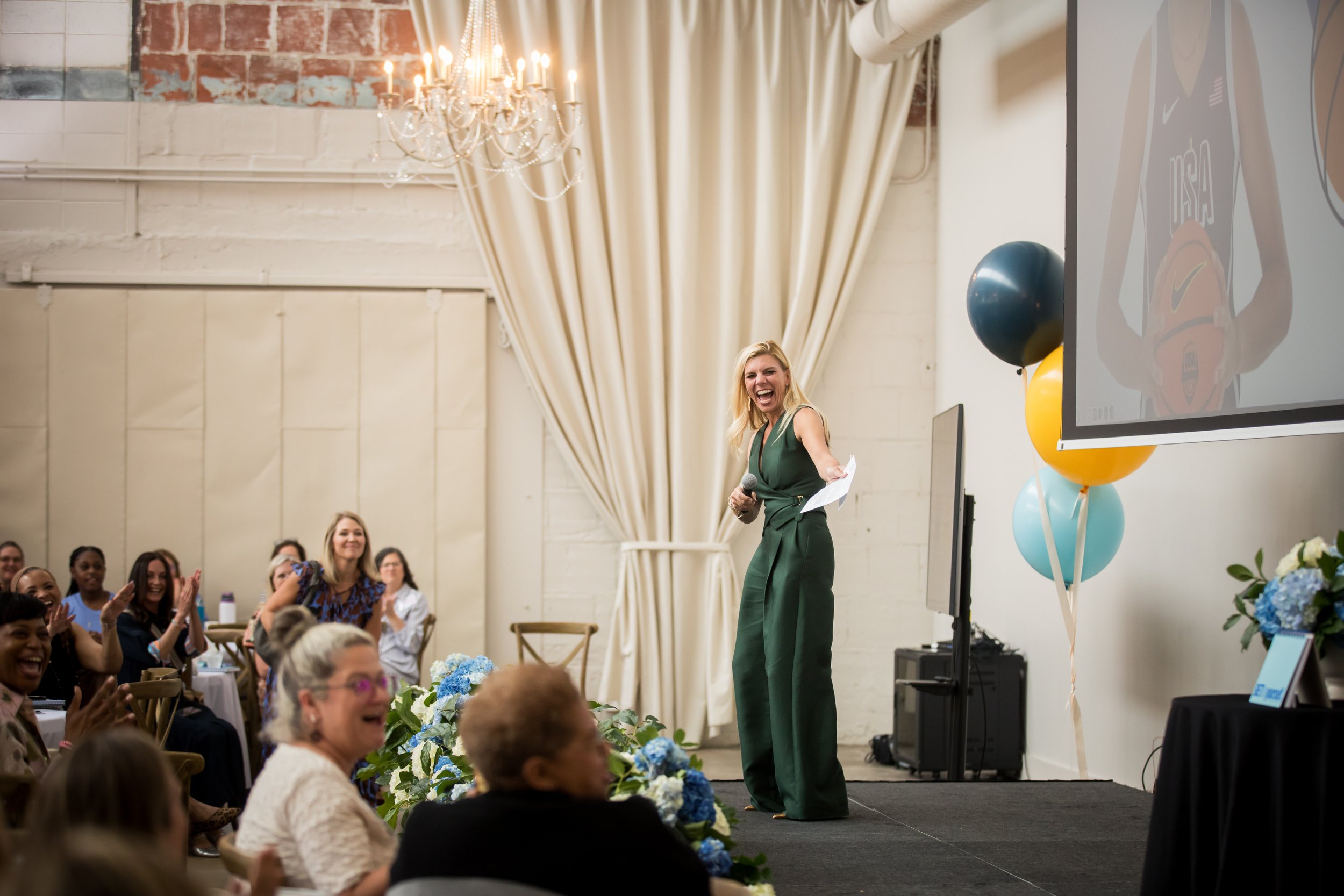
Founder Molly Grantham’s reflection on persistence underscored the theme—
“Success isn’t just about starting. It’s about continuing. When you have an idea and thing you launch, if you’re trying something new, it’s not whether you ‘succeed’ or ‘fail,’ it’s that you keep going.”
Summit 2.0 bridged generations with stories of courage and growth. From the fresh ambition of 18-year-old Kate Topham, who said “I’ve never been to anything with this kind of magic before,” to the seasoned wisdom of 82-year-old Jewell Ballard who took lots of notes and said, “Bet On Yourself still means something to me… you can never quit learning.”
“To grow and evolve is the best feeling in the world,” Molly said from stage in her open. “It’s a feeling inside I now know how to appreciate… but today is really about you finding that feeling and appreciating it within yourselves.”
The following is a rundown from presenters throughout the day.
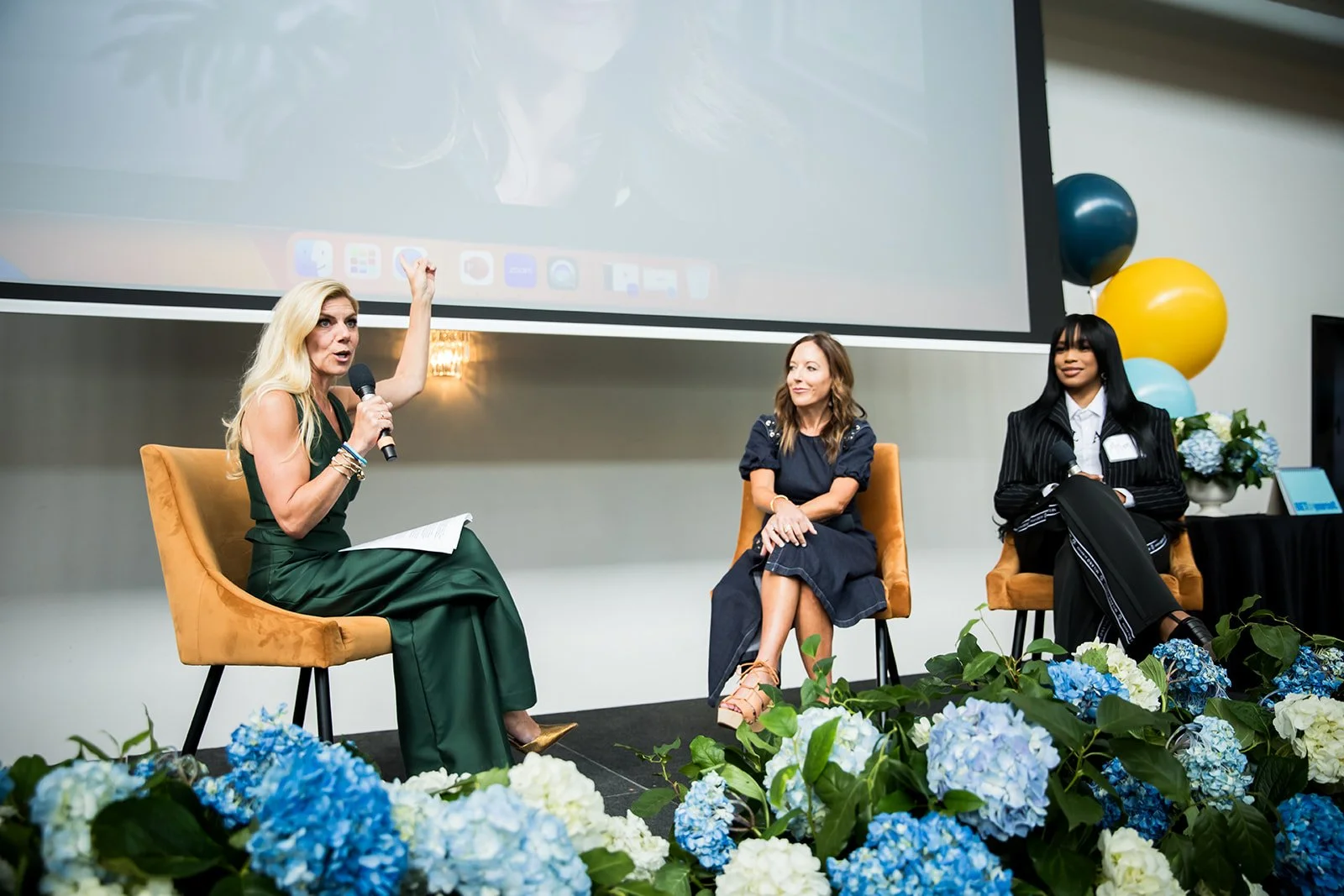
Powerhouse Panel
Featuring on stage:
Michelle Tunno Buelow, owner of Bella Tunno
Milan Harris, owner of MILANO DI ROUGE
Sherry Deutschmann, owner of BrainTrust

How do you scale your skill, find your voice, earn a promotion, pivot a career or launch a business? This Powerhouse Panel dished out real-world wisdom with bite-sized gems. Things like, “Not all customers are created equal,” “Align your brand with your vision,” and “If you fail, fail fast and move on.” These three entrepreneurs didn’t just share winning stories and sage advice, they walked the audience through finding success in failure.
Michelle Tunno-Buelow, whose Charlotte-based baby and child product company is in 5,000 stores and connected to 20 key brands, is also committed to ending hunger. For every product sold, Bella Tunno gives one meal to a child. “If impact is the goal, then I’m successful,” she said, reflecting on how her daughters are now launching nonprofits inspired by their mom’s dedication to start something from scratch and give back.
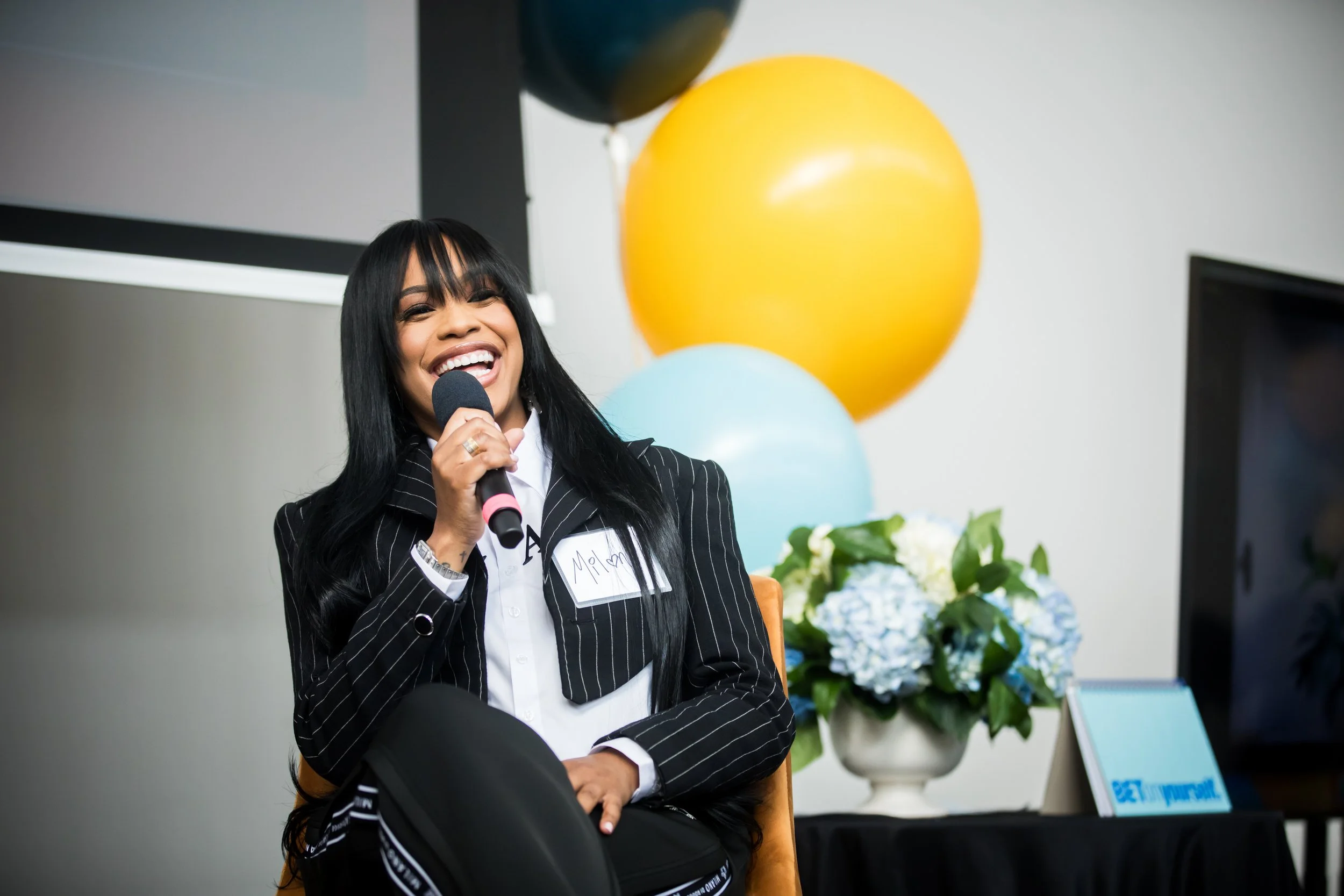
Milan Harris, who launched MILANO DI ROUGE apparel brand with two sweatshirts—one to wear and one to sell—reinvested every dollar she made. That hustle has since grown into a thriving business making over $100-million in direct online sales. “Be vulnerable,” Milan said. “Transparency keeps your customers connected.” Her company is based in Atlanta, but has customers worldwide.
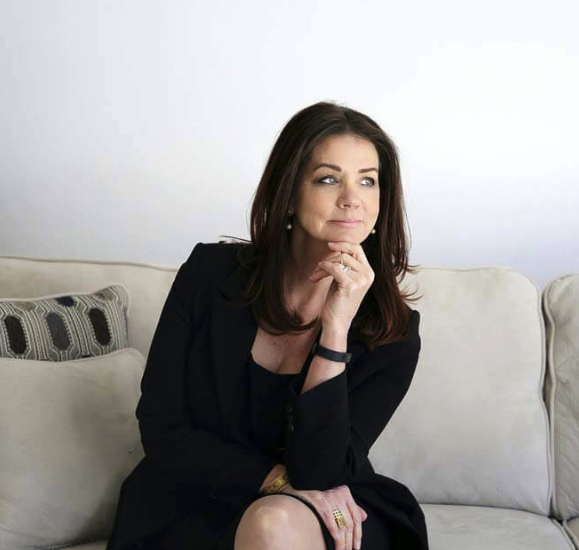
Sherry Deutschmann, out of Nashville, built a business to over $40-million, then sold it. She’s now the founder of BrainTrust, a business that helps other female entrepreneurs. Sherry offered this reality check: “Know your numbers.” She says an employee stole $200,000 from her once and it’s a lesson she never forgot. “Women build incredible business models,” she said, “but too many don’t understand the numbers behind them.”
Audience member Elise Holmes says she soaked in the words. “It really resonated with me,” she said. “I want to go do something. Even if small, who knows where it’ll lead.”
Conversation with Cathy Bessant
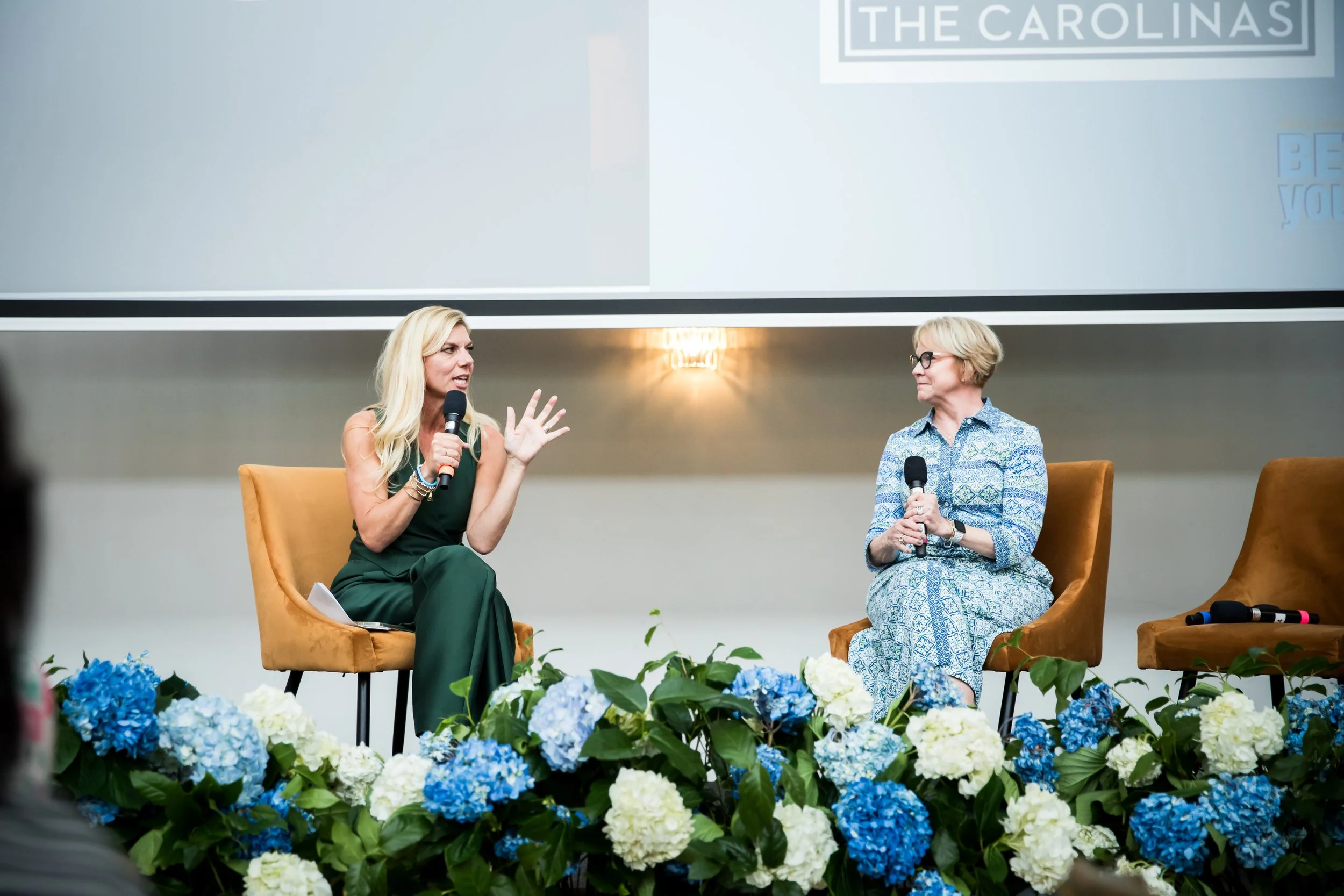
Cathy Bessant’s journey is a masterclass in grit, determination, and the power of betting on yourself. From cleaning rows at the Michigan International Speedway and working at McDonald’s as a teen, to a 40+ year career in banking and now leading Foundation For The Carolinas as CEO, Cathy is living every rung on the ladder.
Starting at the bottom doesn't define where you finish, she told Molly on stage.

“Nobody knows what it takes to show up every day but you,” she said.
In a room filled with professionals from a variety of industries and income levels, Cathy’s authenticity stood out. “I absolutely love how she speaks without barriers,” said Pang Vang, a financial risk management professional. “She’s unapologetically human. We often feel pressured to maintain a certain professional polish, but Cathy just reminded us it’s okay to be real.”
“Betting On Yourself isn’t a moment, it’s a mindset,” Cathy said. “You have to train yourself. It’s a skill you can develop. It takes confidence. It’s a posture that’s contagious. When you bet on yourself, you make it easier to bet on others—and trust others, too.”
What is Cathy’s definition of success?
“Hmmmmm,” Cathy paused before smiling.
“Whatever I do next.”
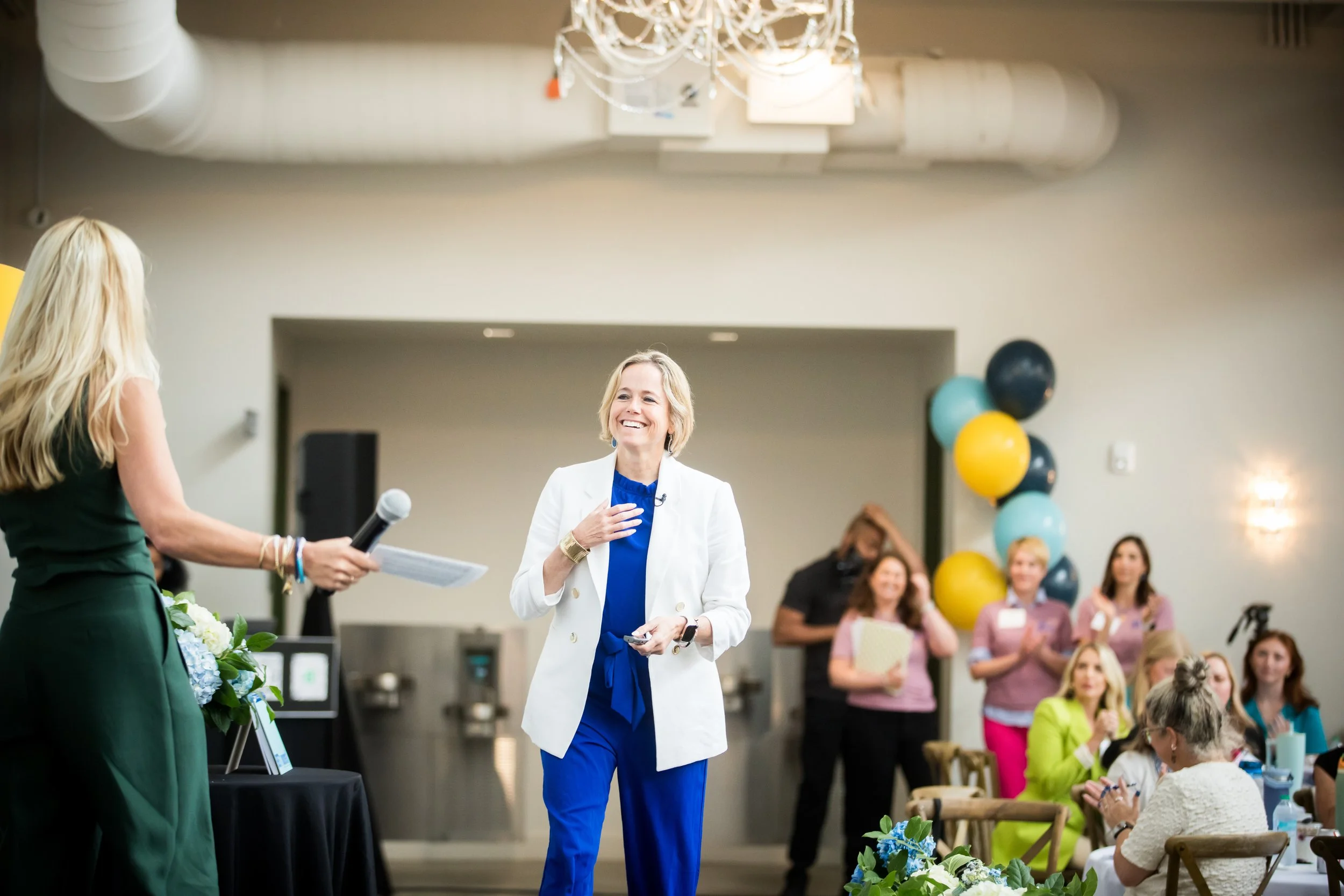
Personal Board of Directors
Dr. Dawn Chanland, Professor of Management at Queens University and an expert in women’s leadership and mentoring, says growth doesn’t happen alone.
“We’re at a summit that’s focused on stepping outside your comfort zone,” she said. “Now is a crucial time to remember that if you’re going to bet on yourself, you need a board of directors.”
Her advice is to assess the shape and strength of your network. Make sure you have a diverse circle of trusted advisors—people whose insights can challenge you, teach you, and help you grow—while knowing not everyone deserves a seat at your table.
“Be intentional,” Dr. Chanland urged. “Pinpoint your needs and goals, then build around them. When people build this kind of support system, they often experience more learning, promotions, job satisfaction, stronger compensation, and are more likely to become top performers. And because every journey is different, every board should be too. Design one that truly fits you.”

Seven Ingredients to Success
Featuring: Kim Henderson, Novant Health
Success doesn’t happen overnight. Kim Henderson, Executive Vice President and Chief Administrative Officer at Novant Health, believes you have to be mindful of what you’re doing in order to get there.
“Here are seven ingredients we all need to get to where we want to go,” she encouraged.
You got this: Words of affirmation give you fuel.
A feeling of empowerment: The strength to keep going when you want to stop.
Opportunity: Seize them… and make them.
Belief: Write down 10 goals and focus on the top four.
Confidence: Smile. Let others see your projection.
Owe it: Everyone had someone who gave them a chance.
Support: Find and create professional/personal support.
“You should have a variety of people in different seasons of life,” Kim said. “People who are younger, the same age, and retired who tell the unvarnished truth and have strong friendships with you.”
Hometown Hero
Featuring: Cierra Burdick, Olympic Medalist
There are basketball players who enjoy the game, understand the rules, and show up for the occasional pickup. Hoopers? They live it. They play with instinct and hunger. They find a way to stay on the court, no matter what.
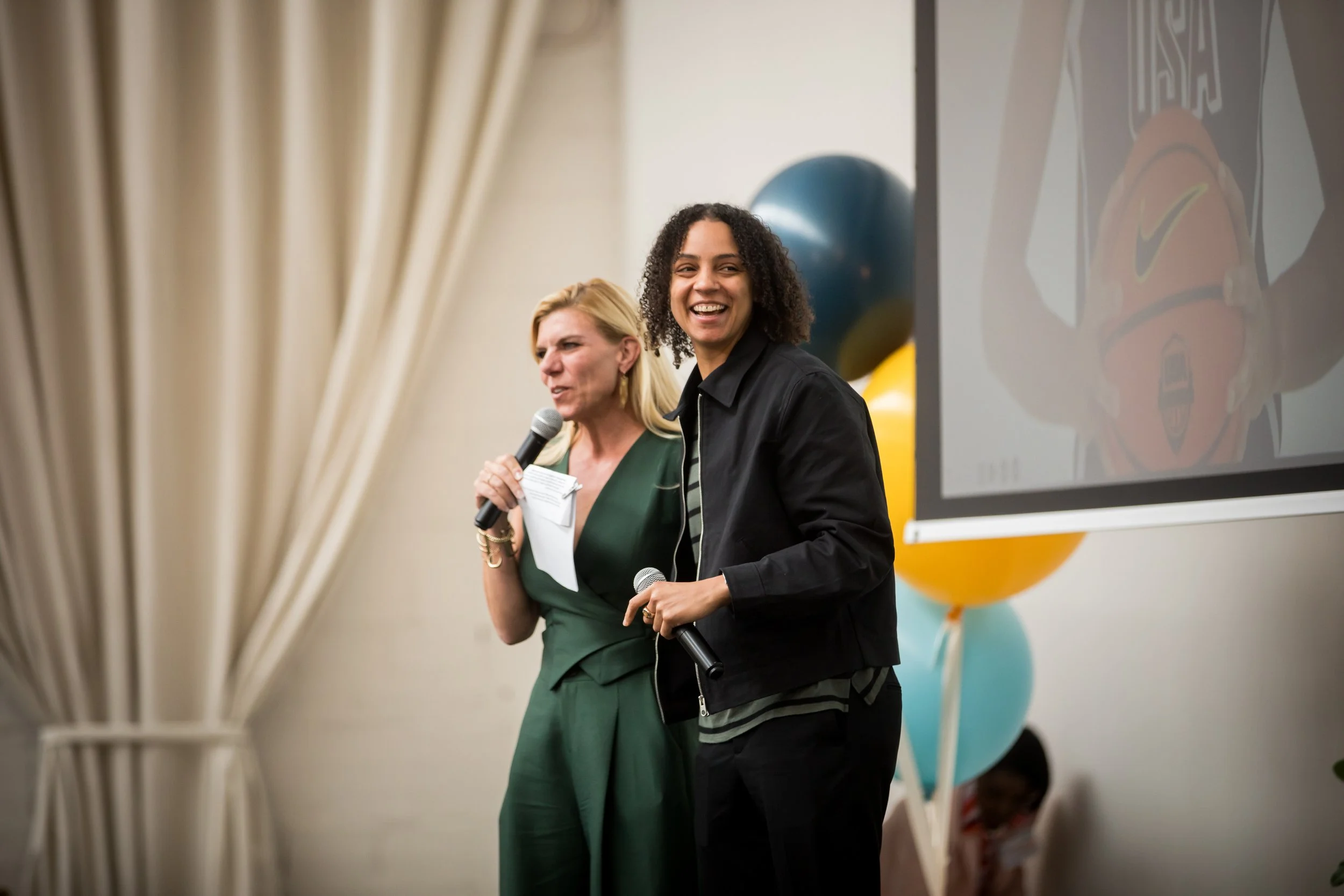
Cierra Burdick is a hooper. Last summer, she left Paris with an Olympic bronze medal as part of the U.S. 3X3 National Team.
“It was beyond my wildest dreams,” she said, remembering the nonstop half-court action. “Beyond my wildest imagination.”
The road to get there wasn’t smooth.
Cierra fell in love with basketball as a kid. Every shot, pass, rebound, and dribble deepened that love. She played college ball at the University of Tennessee and set her sights on the pros. Drafted in the second round by the Los Angeles Sparks, her WNBA journey turned into what she calls a “rollercoaster”—eight teams, multiple cuts, and constant uphill battles.
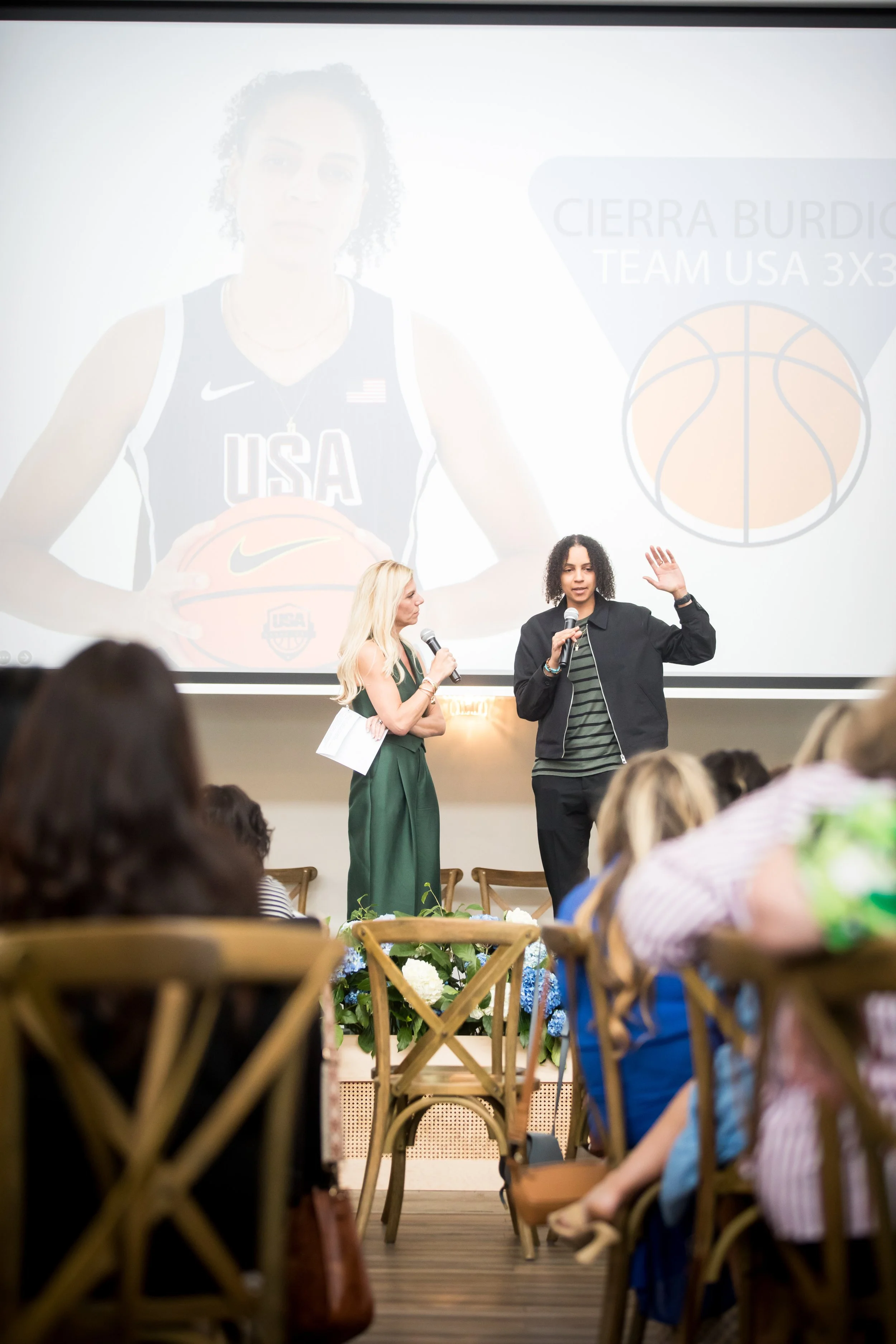
When 3X3 basketball began gaining momentum, Cierra shifted gears. She didn’t make the national team on her first try, but she kept pushing—and made it.
Then came another setback: debilitating hip pain. Doctors said her career was over.
She got a second opinion. And a third. Eventually, a surgeon performed a cutting-edge procedure that not only stopped the pain—it saved her professional career.
“Passion, perseverance and persistance aren’t just talking points,” said Cierra. “They’re survival tactics.”
Cierra’s message is simple: “Bet on yourself. Over and over again. When failure shows up, so do you.”
Betting On Community
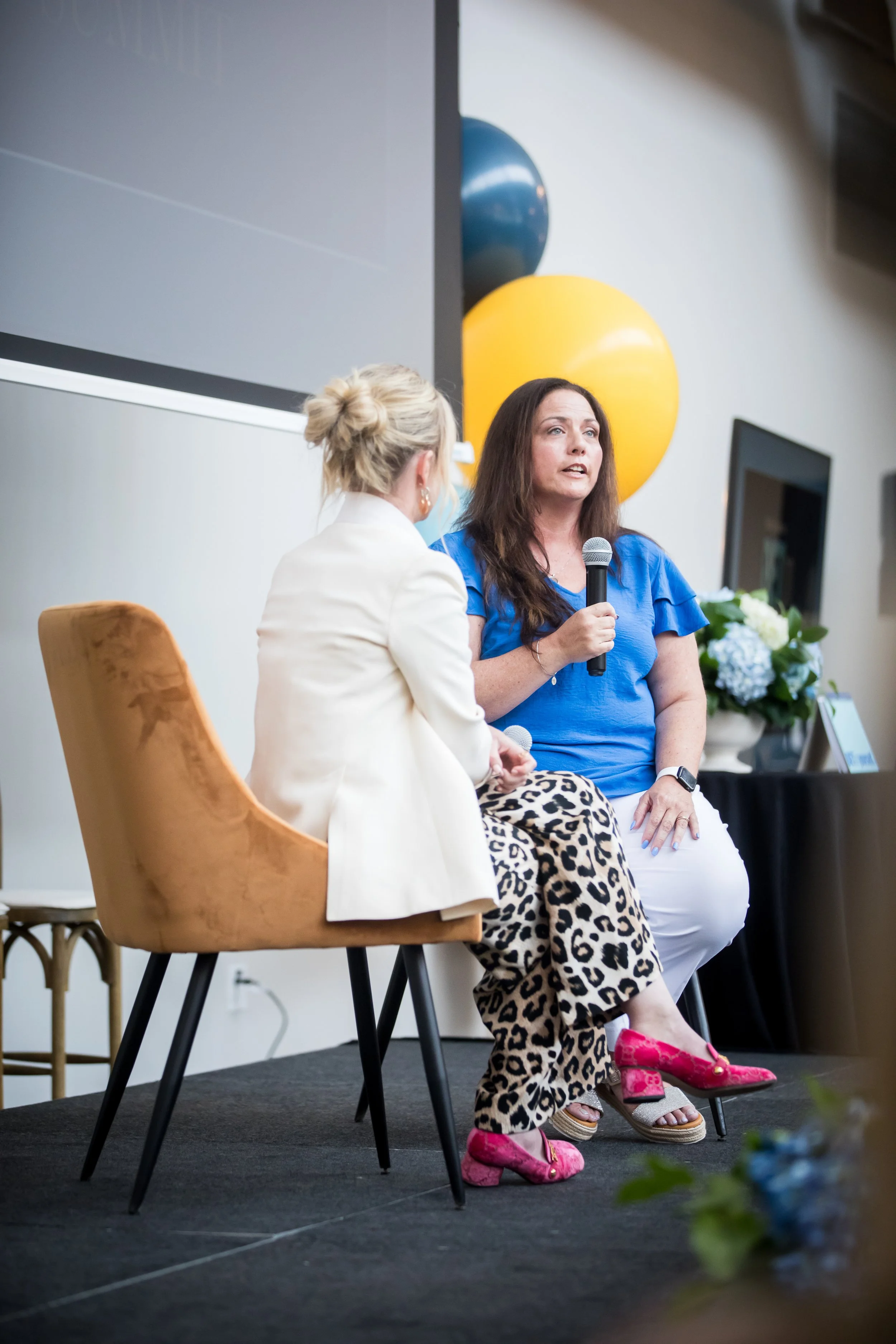
Featuring: Amanda Watts
When Hurricane Helene slammed into western North Carolina on September 27th, 2024, Amanda Watts was having a relatively ordinary day.
Nothing about her life has been ordinary since.
Within 48 hours of the storm’s destruction, Amanda—a local nurse—helped transform the Burnsville Fire Department into a makeshift field hospital.
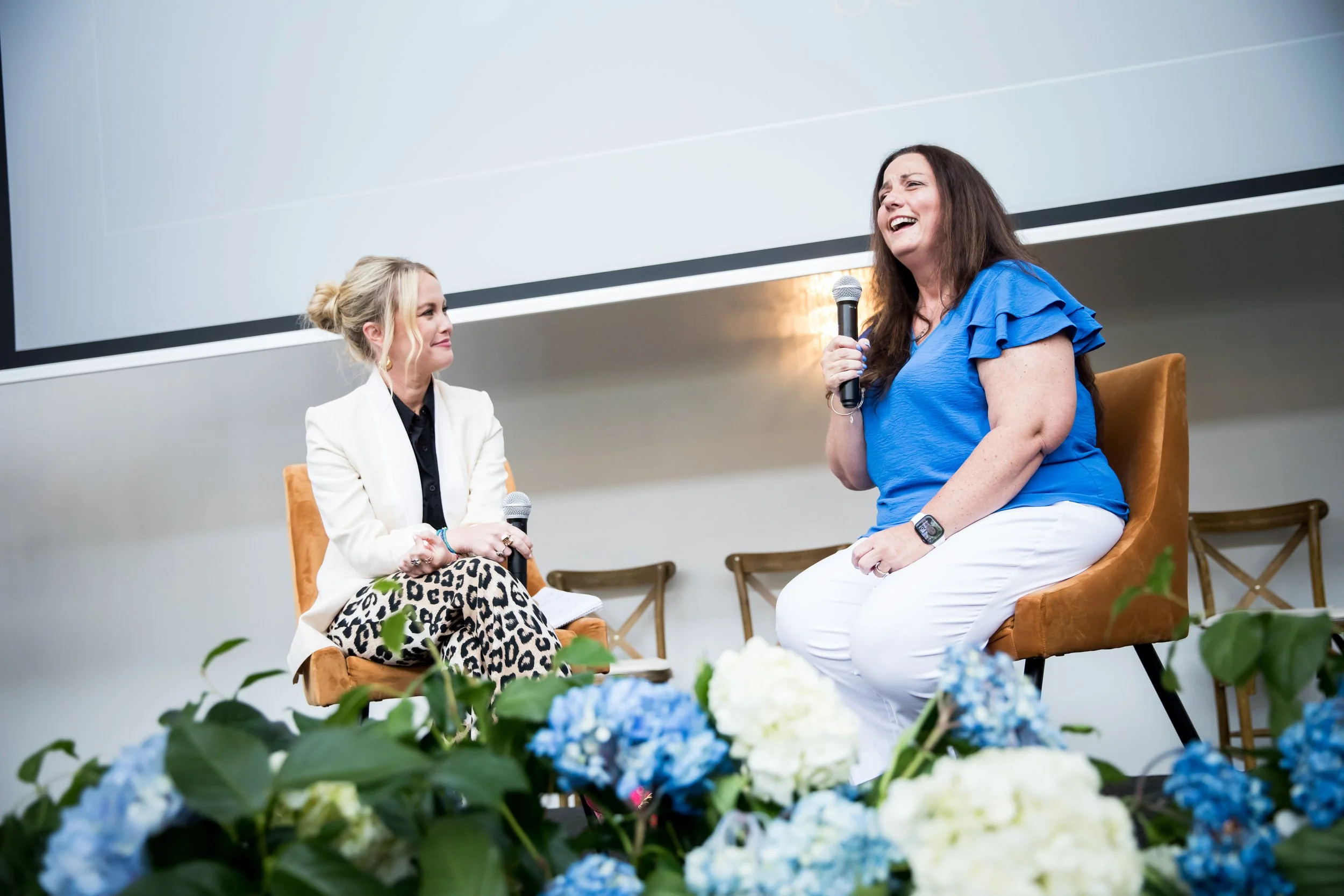
“I instinctively did what I was trained to do,” she told journalist Sarah-Blake Morgan on stage at the Bet On Yourself Summit 2.0. “Help people. Helene devastated my community. Yancey County doesn’t even have its own hospital, and with downed trees, washed-out roads, and impassable debris, access to care was almost nonexistent.”
Amanda described how emergency calls quadrupled overnight. Ambulance response times stretched to hours. Medical facilities in the region were either flooded or shut down. With word spreading through social media and first responders, people started arriving at the fire station.
What started with a skeleton crew and few supplies became something larger. Over the next several weeks, Amanda and a growing team worked to relieve pressure on overwhelmed ERs.
Her onstage conversation with Sarah-Blake resonated deeply.
“We have to help each other,” Amanda said. “I’m still running the hospital every Saturday. We offer free care, free medicine. Donations keep us going because the need hasn’t gone away. For over four months, we operated 24/7. I barely saw my kids. It took weeks before I even made it back home after the storm. But people needed help. Please, don’t forget Western North Carolina. We still need it.”
To support Amanda’s continued efforts, or learn more about the local nonprofit making it possible, visit www.mountainstrong828.com.
“I instinctively did what I was trained to do,” she told journalist Sarah-Blake Morgan on stage at the Bet On Yourself Summit 2.0. “Help people.”

Finale: Bet On Yourself
Featuring: Molly Grantham
Founder Molly Grantham closed out Bet On Yourself Summit 2.0 with no notes, just heart.
“The phrase ‘Bet On Yourself’ is deeply personal to me,” she told the crowd from center stage. “Fourteen months ago, I walked through total career upheaval. Since then, I’ve learned five core strategies that helped navigate the unknown. I want to share them with you because change is coming for all of us. Whether it's planned or blindsiding, the ability to transform positively in the face of it is what defines long-term success.”
Molly’s talk wove together real-life lessons, data-backed insights, and moments of vulnerability. A guide on how to bet on yourself, built from both her missteps and wins. She encouraged everyone to jot down whatever resonated.
When the strategies wrapped, the keynote shifted to connection.
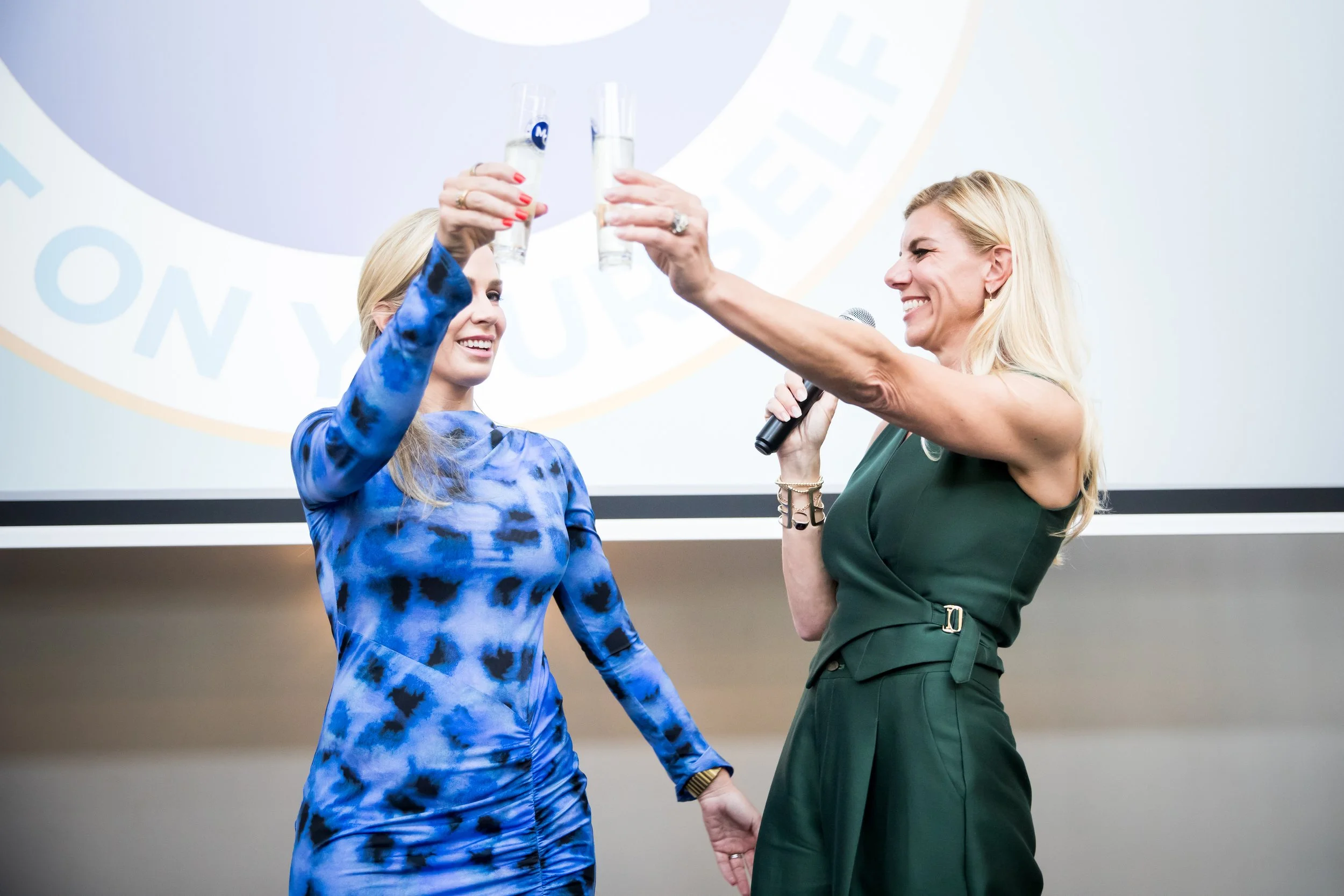
“Ask me anything,” Molly said, opening the floor for live Q&A. “I’m grateful you’re here. We’re in this together.”
WCCB’s lead anchor Morgan Fogarty helped moderate the 30-minute conversation, guiding questions that ranged from professional pivots to personal revelations.
At the end, the two longtime friends raised champagne flutes in a celebratory toast to the audience.
“I’m proud of you, Molly,” Morgan said. “I think most of us in this room are being helped by your honesty.”
“Then here’s to all of us,” Molly replied. “Walk back into your life knowing the next move is yours. Just don’t forget to take it. Bet On Yourself.”
Also featured in Bet On Yourself Summit 2.0: Janine Davis, veteran radio host, talking with a panel of five teenagers about the future of confidence… a headshot clinic (1,467 stunning portraits taken)… built-in networking opportunities… breakfast… lunch… gifts… and overstuffed swag bags from our Bet On Yourself family members.